action
official tag for theme: Action
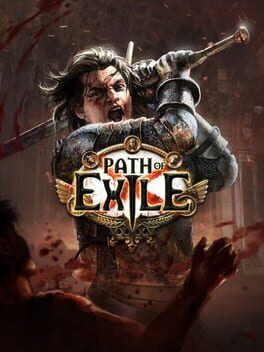
Path of Exile
ARPGs have been around for a while. Originally fomented in the tabletop role-playing games like Dungeons and Dragons and proto-ARPG games like Ultima Underworld, Gauntlet, and Dungeon Master in the 1980s and early 1990s, Blizzard North, a newcomer to the games industry, sought to make a new type of ARPG. Between 1993 from the company's founding to 1997, they would create a new game that would change the face of the genre forever; Diablo. Addictive action-packed gameplay, paired with procedurally generated dungeons and grim atmosphere, made Diablo a generational hit.
Usually in the games industry, sequels are tough to pull off. Either through a loss of the essence of the original, too wide of a scope (or perhaps too little), or failing to innovate, sequels are usually destined to fall flat, especially if the original game creates such a high bar. That was not the case for Diablo II. Released in 2001, Diablo II went on to improve upon the original's gameplay strengths, bolstering the games story and atmosphere, and presenting a deep and complex item system that still holds players attentions even to this day. And for many years after it's release, Diablo II would be the ultimate benchmark for what a good ARPG needs to be; action-packed, loot-driven, and creative character builds. What game could come out of Diablo II's long shadow?
A few years after Diablo II's release, two New Zealanders, Chris Wilson and Jonathan Rogers, who met while studying computer science at the University of Auckland, came together and formed a new video game company called Grinding Gear Games. Their mission? To develop the spiritual successor to Diablo II. Not an easy task, but with what they lacked in experience they made up with in passion for the genre. Drawing from multiple inspirations, especially Diablo II, Chris Wilson and his team started development in 2006. This game would go on to become Path of Exile.
Three years prior to the founding of Grinding Gear Games, David Brevik, the main director for Diablo and Diablo II, resigned from Blizzard North after hearing rumors of the company being sold off by it's parent company, Vivendi Games. Many Blizzard North staff were laid off in the process, and later was consolidated into the main office of Blizzard Entertainment. The remaining staff were to work on the successor to Diablo II, with a new director, Jay Wilson. This game would go on to become Diablo III.
Two games were now being developed at the same time to reach the heights of Diablo II. Announced in 2008, Diablo III would go on to become the most preordered game at the time, generating hype that would ultimately draw flat. It's release in 2012 would have it's fair share of controversies, one being massive server issues at launch due to forced online play, a real money auction house that undermined the loot-hunting that defined the Diablo series, a departure from the item complexity that was critical to Diablo II's success, and a change in art style that made the grimness of Diablo II into a backdrop, with a more flashy and brighter colors taking the forefront. While universally praised for it's improvement on combat gameplay, making it much more fluid and satisfying, Diablo III would detract from the path laid out from it's predecessor in it's attempt to appeal to a wider audience.
One year after the release of Diablo III, Path of Exile would hit the market with a much quieter splash. Although not as massive as Diablo III, Path of Exile hit directly upon the desire for a innovative and complex item/loot system, a deep playground for character customization, and a much darker and grimy tone than it's competitor. It was not without technical issues, with poor desync and melee responsiveness due to server-side authoritative networking, however the game at it's core was spiritually Diablo II modernized, innovated, and expanded upon. And it would grow to become the defining game in the genre.
So what is really so good about Path of Exile? Let's start with items. You begin playing and traversing the 10 Acts of the campaign. You pick up an item and identify it. While experienced players can sometimes instantly know whether an item is good or not, it's not immediately clear for people not familiar with the game. There is not just simply attack or defense stats like in Diablo III. There are multiple avenues for damage modifiers to weapon items, and multiple avenues for defense modifiers for armor as well. And each modifier has different tiers to which they can roll, so just hitting a modifier you need is not enough most of the time. And it is these multiple contributing factors that make Path of Exile's item system so satisfying and adrenaline pumping. The stars aligning on an item, with all the modifiers and the highest tiers that you need to complete your build, makes the loot grind all the more worth it. Another interesting aspect to Path of Exile is that unique items (the highest rarity items in the game) aren't just defaulted to being the best items in the game. Path of Exile divides its items into normal, magic, rare, and unique items. Most of the time, you will be wearing mostly rare items, which are randomly rolled between all the different modifiers that exist in the game. Uniques are not created to be just be better rare items. Uniques are preset items in the game, with sometimes build defining modifiers that you cannot find on rare items, but most of the time having downsides that you have to take into account. Characters will usually have one or two uniques, with the rest being rare items to help complete the the build. That is not the case in Diablo III, where rare items are just a stepping stone to unique items, which are just inherently more powerful. Tied to this item system is the deep and complex crafting system, which 99% of the time will be better than what you can find from items on the ground. Learning this crafting system is essential to creating the highest echelons of items in the game. It is with this understanding that items become so much more rewarding and satisfying to players, who can use this item and crafting system to creatively make items that adhere to their builds. It is these systems that drive Path of Exile's popularity in the space, and should be rightfully praised.
Path of Exile's other great strength is it's build diversity. You may have seen pictures of the passive tree, with it's hundreds of branches and nodes. While it may be intimidating to players at first, it is essential for those players who love to absolutely min max builds. The tree is ultimately a fluid mechanic; it changes as your build progresses, you build in ways to engage and optimize the tree more. And it is important to understand that it only serves to enhance, not be the basis. The basis for builds in Path of Exile comes from skills, which the tree serves. These skills are in fact items called gems, which can be sold from vendors or dropped from monsters. These gems can then be slotted into sockets in your armor, and be amplified by other gems called support gems. There are hundreds of gems, each providing a niche that serves to fit different builds. You can play an archer that fires poison arrows, or a necromancer who summons fiery skulls, or a marauder whose attacks summons copies of his weapon that fly in circles around him. The possibilities, while not endless, are so wide that it makes the creativity endless.
Even with these systems in place, there needs to be goals that players can achieve, a challenge that they need to overcome the effort they put into their builds. The endgame in ARPGs is the ultimate test for players who spend thousands of hours grinding items and perfecting builds. This is where Path of Exile stands above the rest in the genre. The majority of players do not reach the endgame bosses of Path of Exile, which is a testament to how difficult they are not only to reach, but also to fight. It can take weeks of grinding and meticulous tweaking of builds to be able to attempt to kill one of these bosses, which some players might find off putting. However, it is so important to make the endgame relentlessly challenging in these games in order to reward time and effort put in, and Path of Exile does not shy away from it.
However, with all these praises, Path of Exile is not a perfect game. One of the issues with having so many combinations and so much complexity of builds is that is becomes near impossible to balance. Grinding Gear Games has over the years released many different expansions to the game, and each time, there are sometimes only a handful of skills that can reach the deep endgame. And many times throughout the game's history, melee skills usually fall short to ranged skills, which is a problem that is not unique to Path of Exile. Another balancing issue that is apparent is different mechanics having more of an impact than others, which may make players feel like they are locked into certain mechanics each expansion due to how much better they are than others. There have also been communication issues between Grinding Gear Games and the player base, with the studio sometimes sticking relentlessly to introduced game mechanics that generated widespread criticism. Other times, leaving out details of things being removed or added to the game in patch notes has drawn ire from experienced players, who rely on accurate patch notes to plan their builds. The studio also is sometimes hesitant to introduce quality of life changes to the game out of fear that it could potentially ruin the studio's vision of a hardcore ARPG experience. Some of these quality of life changes could be as simple as reducing the amount of clicking that the player has to do for tedious tasks, but historically have gone ignored. Recently, the studio has introduced more and more quality of life changes to the game, which has helped with repetitive strain injury. Technical issues like performance issues due to an aging game engine, bad visual clarity of monster abilities and player skills, and server issues at expansion launches can also be tagged onto the list of criticisms for the game.
With all this said, Path of Exile was born out of a passion for the genre. It was made with a strong vision and understanding of what made previous ARPG titles so addictive and fun. It is games like this that people will use as benchmarks in video game history, like it's predecessor Diablo II, in order to judge the future games in the genre. And with it's continued development and successor in Path of Exile II, there will be many more years to play and enjoy it.
Super well polished game. The animation for the movement of your character is clean. I love how the arcs move after they are shot and damaged, its really erractic and feels realistic.
Solos is mostly friendly as long as you say dont shoot but trios - its shoot on sight.
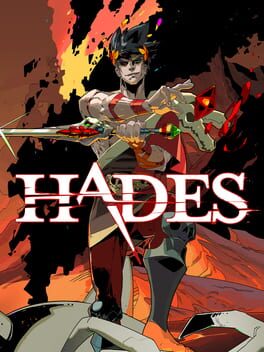
Hack and Slash is one of my favorite genre and Hades is up there for one of the best so far. Music, art design, and the villian boss levels go crazy with the detail for how it look. Definitely a game you can play when you come past the time to chill play underworld again and again